Recharge · Harvesting · Participation
Water
conservation
Every drop, every source, every community. India's conservation effort is run as an annual campaign rather than a permanent construction programme, because recharge works have to be ready before the rain and maintained by the people who use them.
- Jal Shakti Abhiyan
- Launched 2019; annual in all districts
- Catch the Rain
- From 22 March 2021
- Current form
- Jal Sanchay Jan Bhagidari: Catch the Rain, from 1 June 2026
- Targeting
- Priority blocks identified by the Central Ground Water Board
Catch the rain, where it falls, when it falls.
The slogan given to the campaign at its launch on World Water Day, 22 March 2021
The phrase is more than a slogan; it is a statement of method. Water that runs off is water lost to the aquifer beneath it. Conservation policy in India is therefore overwhelmingly about interception — slowing water down long enough for it to soak in — rather than about restricting use, which is largely beyond the reach of any central instrument.
That is why the work takes the physical form it does: check dams, percolation tanks, recharge shafts, farm ponds, contour trenches, the desilting of tanks that already existed, and rooftop harvesting structures. Most of it is small, local and cheap; almost none of it survives without someone in the village with a reason to maintain it.
How the campaign
has developed
The national conservation campaign has been reorganised several times since 2019. Each change has broadened either its geographical scope or the range of activities folded into it.
Jal Shakti Abhiyan launched
A time-bound campaign focused on water-stressed districts and blocks, built around water conservation and rainwater harvesting, the renovation of traditional water bodies, the reuse of water and recharge of structures, watershed development and intensive afforestation.
Jal Shakti Abhiyan: Catch the Rain
Launched by the Prime Minister on World Water Day and extended to all districts in the country, rural and urban, rather than to water-stressed districts alone. From this point the campaign has run annually.
Jal Sanchay Jan Bhagidari
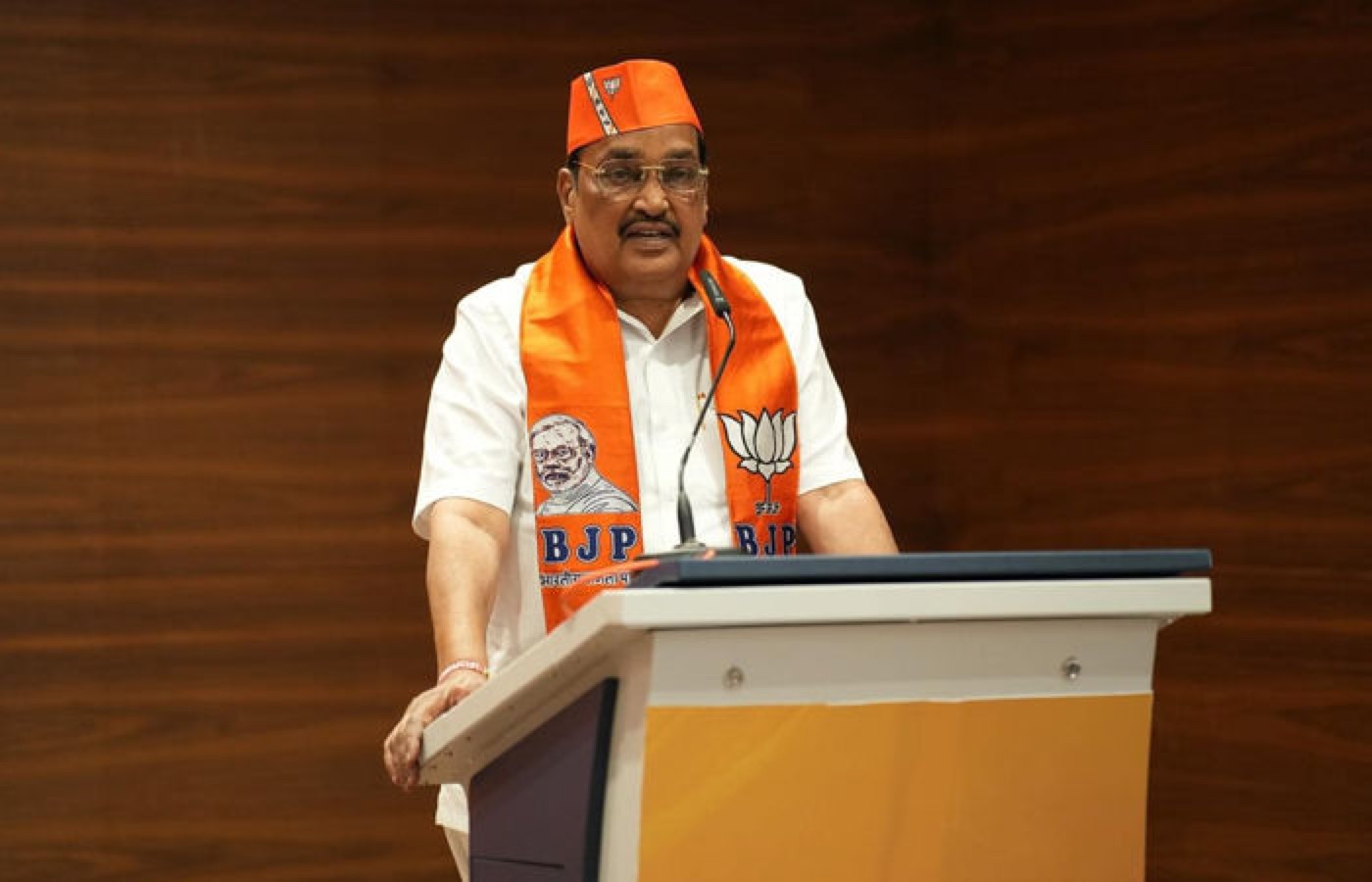
The 2025 edition was launched from Panchkula, Haryana by the Union Minister of Jal Shakti, under the theme of people's action for water conservation, with grassroots engagement focused on 148 districts identified by the Central Ground Water Board.
Jal Sanchay Jan Bhagidari: Catch the Rain
The community-contribution strand and the rainwater harvesting campaign were merged into a single campaign, with renewed emphasis on rainwater harvesting, groundwater recharge, water storage and community participation.
Why campaigns rather than schemes
A recharge structure is only useful if it exists before the monsoon and is desilted after it. That is an annual rhythm, not a project cycle — which is the stated reasoning behind running conservation as a recurring, dated campaign with a pre-monsoon deadline, rather than as a continuous construction programme.
Six kinds of intervention
Rainwater harvesting
Capturing rain where it falls — from rooftops in settlements, and from field and catchment surfaces in the countryside — and directing it to storage or into the ground rather than allowing it to run off.
Groundwater recharge
Structures built specifically to put water back into an aquifer: recharge shafts and wells, percolation tanks, check dams and contour trenches that hold surface flow long enough for it to infiltrate.
Traditional water bodies
Desilting and restoring tanks, ponds, step-wells and village reservoirs that already exist. Repairing an old structure is generally cheaper and faster than building a new one, and it restores a storage capacity the landscape was designed around.
Watershed development
Treating a catchment as a unit — ridge to valley — so that soil, vegetation and water are managed together rather than as separate problems addressed by separate departments.
Reuse and grey water
Managing household waste water so that it is used productively or safely infiltrated, rather than pooling in village lanes where it becomes both a sanitation problem and a contamination route into the local aquifer.
Efficient irrigation
Because irrigation dominates demand, water saved in the field outweighs almost anything saved elsewhere. Micro-irrigation and changes in cropping practice are counted as conservation measures for that reason.
Three programmes,
reported outcomes
The figures below were stated by the Union Minister of Jal Shakti in a written reply to the Lok Sabha on 29 January 2026. They are government-reported programme data.
Atal Bhujal Yojana
Implemented in 80 water-stressed districts across seven States, to demonstrate community-led groundwater management by training and empowering communities to manage the resource themselves.
Rainwater harvesting and recharge structures completed or rejuvenated
Area brought under efficient irrigation practices
Mission Amrit Sarovar
Launched with the aim of developing or rejuvenating at least 75 water bodies in every district of the country — an explicitly decentralised target, set per district rather than nationally.
Amrit Sarovars constructed or rejuvenated, adding storage and recharge
National Initiative on Water Security
Launched jointly in September 2025 by the Ministry of Rural Development and the Ministry of Jal Shakti, directing the rural employment programme at the blocks the groundwater assessment identifies as stressed.
Minimum shares, as decided under the initiative.
Jan Bhagidari
Jan Bhagidari — people's participation — is the organising principle stated across the ministry's conservation documents, and it is a practical claim rather than a rhetorical one. A check dam built by a contractor and forgotten silts up within a few seasons. A tank that a village desilts each year because it is theirs keeps working.
The campaign structure reflects this. Jal Sanchay Jan Bhagidari is described as seeking cost-effective local solutions tailored to specific water challenges through community ownership. The annual Jal Utsav is organised in three tiers — Jal Mahotsav nationally, Rajya Jal Utsav or Nadi Utsav at State level and Lok Jal Utsav at Gram Panchayat level — explicitly tying maintenance and review to the local cultural significance of water.
Whether participation of this kind produces durable maintenance is a legitimate question, and one that would require independent evaluation to answer. This page sets out the design and the reported figures; it does not assert that the design has succeeded.
Sources and references
- Press Information Bureau, Ministry of Jal Shakti, Release ID 2220203, 29 January 2026, reply by the Union Minister of Jal Shakti to Lok Sabha Starred Question 4, for Atal Bhujal Yojana, Mission Amrit Sarovar and the National Initiative on Water Security — pib.gov.in
- National Water Mission, Department of Water Resources, River Development and Ganga Rejuvenation, for the Jal Shakti Abhiyan and Catch the Rain campaigns — jalshakti-dowr.gov.in
- Press Information Bureau, Ministry of Jal Shakti, Release ID 2247224, 31 March 2026, for the three-tier Jal Utsav structure — pib.gov.in
- Central Ground Water Board, for the block-level classification used to target campaign activity — cgwb.gov.in
Last updated: September 2026