Born in Jalgaon district
Born in the village of Pimpri Akarout in Jalgaon district, Maharashtra. His father, Raghunath Patil, served as a police constable.
Union Minister of Jal Shakti
Public ServiceWater GovernanceParliamentary Work
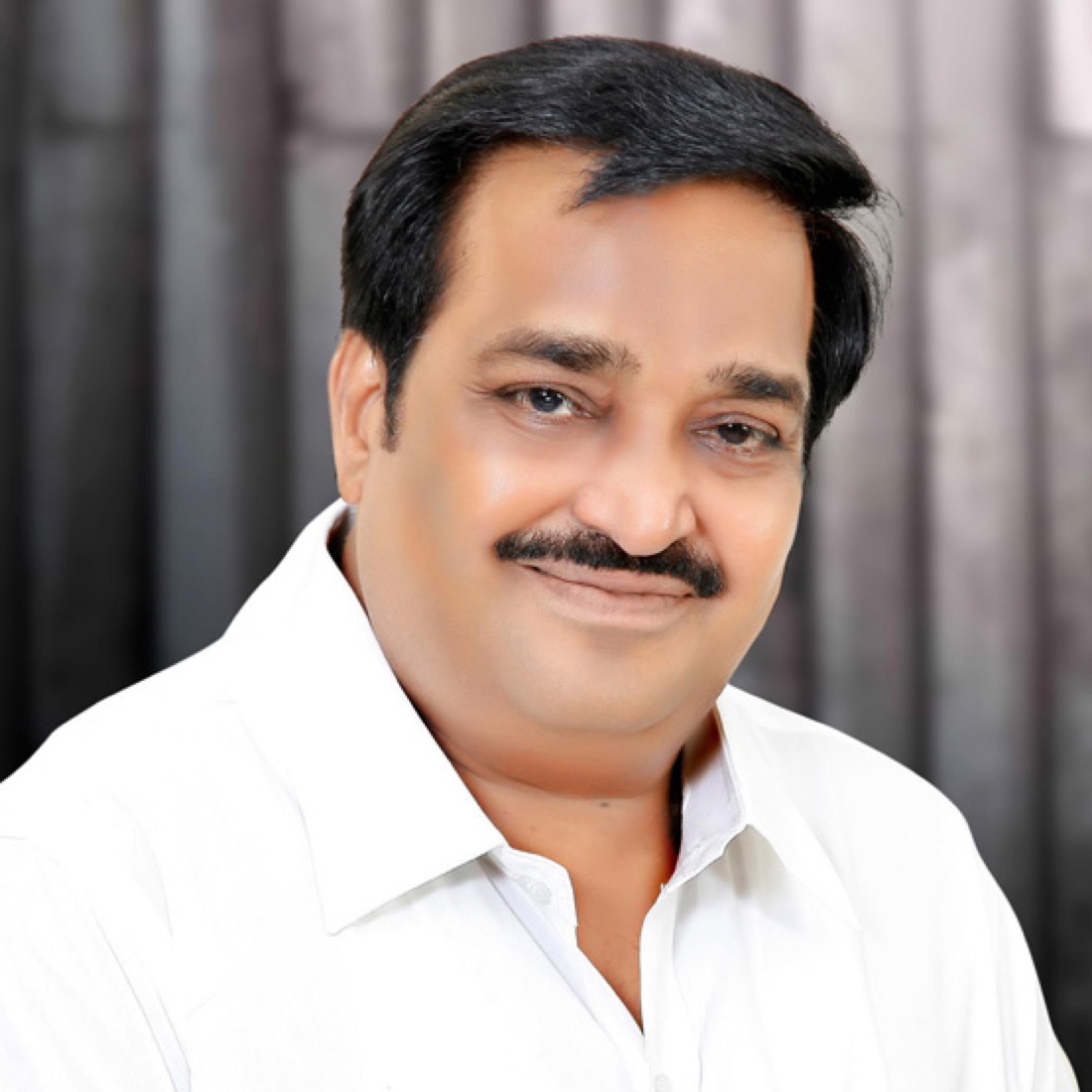
Shri Chandrakant Raghunath Patil, known in public life as C. R. Patil, is the Union Minister of Jal Shakti in the Government of India and the Member of Parliament for Navsari in Gujarat.
He was elected to the Lok Sabha from Navsari in 2009, the first general election held after the constituency was created under the 2008 delimitation, and has been returned from the same seat at every general election since — in 2014, 2019 and 2024. He was sworn in as a member of the Union Council of Ministers on 9 June 2024 and took charge of the Ministry of Jal Shakti later the same month.
The portfolio is a broad one. The Ministry of Jal Shakti brings together, in a single ministry, responsibility for the country's water resources and rivers and for rural drinking water and sanitation. In practice that means the Minister is answerable in Parliament for the Jal Jeevan Mission, the Swachh Bharat Mission (Grameen), the Namami Gange Programme and the national water-conservation campaigns, as well as for the technical institutions — the Central Water Commission, the Central Ground Water Board and the river boards — that sit beneath the ministry.
He was earlier President of the Bharatiya Janata Party's Gujarat state unit, from 20 July 2020 until 4 October 2025, when he was succeeded in that post. That is a past role and is set out here as part of the historical record, not as a current designation.
Six decades of biography compressed into the points that are documented: a technical training certificate, fourteen years in uniform, organisational work in Surat, four parliamentary terms and a Union portfolio.
Born in the village of Pimpri Akarout in Jalgaon district, Maharashtra. His father, Raghunath Patil, served as a police constable.
His formal qualification, as listed in his Lok Sabha member record, is from the Industrial Training Institute at Surat — a vocational, trade-based training route rather than a university degree.
Joined the Gujarat Police as a constable in 1975. Published accounts of the length of that service differ; see the Early Life page, where the discrepancy is set out rather than resolved.
Joined the Bharatiya Janata Party and took up organisational responsibilities in Surat city, later serving as the unit's treasurer and vice-president.
Appointed Chairman of Gujarat Alkalies and Chemicals Limited, a state public-sector undertaking — his first executive office in the public sector.
Won the newly created Navsari constituency at the 2009 general election, becoming its first Member of Parliament, and entered the 15th Lok Sabha.
Returned from Navsari at three successive general elections, with recorded margins of 5,58,116 votes in 2014, 6,89,668 in 2019 and 7,73,551 in 2024.
Served as President of the BJP's Gujarat unit from 20 July 2020 to 4 October 2025. A past office, concluded.
Sworn in to the Union Council of Ministers on 9 June 2024 and allocated the Jal Shakti portfolio, with responsibility for both departments of the ministry.
Scroll for the full chronology
A tap in a village is the visible end of a long chain: a source that has to keep yielding, a treatment step that has to hold, a pipeline that has to be maintained, a village committee that has to collect for it, and a monitoring system that has to notice when any of it fails. The ministry's work is that whole chain.
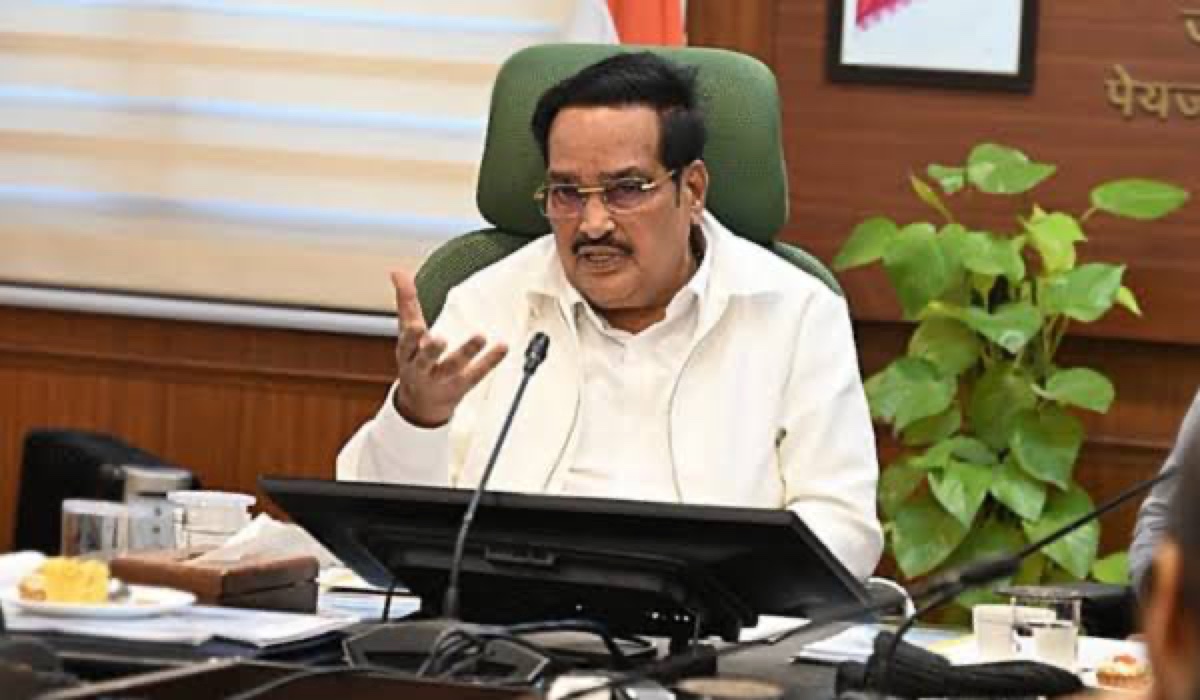
A connection counts only if water arrives, in sufficient quantity, of the prescribed quality, on a regular basis. Jal Jeevan Mission 2.0 makes this shift from counting assets to measuring service explicit.
Roughly two-thirds of India's irrigation and most rural drinking water rest on groundwater. The Central Ground Water Board assesses it annually, block by block.
Waste water and solid waste determine whether a village's own sources stay drinkable. Sanitation and water supply are treated as one problem, which is why one ministry holds both.
Rivers cross states, so their management sits with national missions, river boards and tribunals rather than with any one administration.
A constitutional note
Water is a State subject under the Constitution. The Union government legislates for inter-state rivers, funds and sets standards, and the States build, own and operate the schemes. Almost every figure on this site is therefore reported by States and UTs to the Centre.
Who is accountable
Ministers answer for policy, funding and national monitoring. Delivery on the ground is the responsibility of State governments, district administrations and Gram Panchayats. This site keeps those layers distinct.
How figures are read
Every programme figure here carries the date it was reported and the document it came from. Government data is revised; a number without a date is not information.
Formed in May 2019 by merging two existing ministries, so that the resource and the service that depends on it would be administered together.
Until 2019, responsibility for India's water was divided. The Ministry of Water Resources, River Development and Ganga Rejuvenation held irrigation, river basins and the Ganga programme. A separate Ministry of Drinking Water and Sanitation held rural water supply and the sanitation mission. The two dealt with the same aquifers, the same rivers and often the same villages, from different buildings.
The Ministry of Jal Shakti was created by merging them. It now works through two departments, each with its own Secretary and its own budget demand, under one Cabinet Minister.
Irrigation and water resource development, inter-state rivers, groundwater science and regulation, flood management and the Ganga programme. The Central Water Commission, the Central Ground Water Board, the National Water Development Agency and the National Mission for Clean Ganga sit here.
Rural drinking water supply and rural sanitation. It runs the Jal Jeevan Mission and the Swachh Bharat Mission (Grameen), sets water-quality and service norms, and operates the national monitoring systems that States report into.
A national programme to bring a working tap-water connection to every rural household. The figures below are as reported by States and Union Territories and published by the Press Information Bureau on 31 March 2026.
Rural households with a tap connection when the mission began
16.7% of rural households, August 2019
Rural households reported with tap water supply
About 81.8% of roughly 19.36 crore rural households
Additional connections reported since August 2019
Cumulative, as reported by States and UTs
Target date for universal rural coverage under the restructured mission
Jal Jeevan Mission 2.0, approved 10 March 2026
On 10 March 2026 the Union Cabinet approved a restructured second phase. The stated shift is from an infrastructure-centric approach — how many connections have been installed — to a service-delivery model, in which a Gram Panchayat is declared Har Ghar Jal only once adequate in-village operation and maintenance arrangements are confirmed to exist.
The total outlay was raised to ₹8.69 lakh crore, with central assistance of ₹3.59 lakh crore against ₹2.08 lakh crore approved in 2019–20. States now sign reform-linked memoranda of understanding with the National Jal Jeevan Mission before funds are released, and releases are conditional on scheme validation, certified compliance with CPHEEO design norms and reconciled expenditure.
Under Sujalam Bharat, every village is assigned a unique service-area identifier so that supply can be traced from source to tap. As at 31 March 2026, 1,77,156 Sujal Gaon service-area IDs had been generated, linked to 1,13,849 water-supply scheme IDs.
Figures reported by States and UTs; published in PIB Release ID 2247224, Ministry of Jal Shakti, 31 March 2026. They are government-reported programme data, not an assessment attributable to any individual office-holder.
Every drop, every source, every community.
The organising idea behind India's annual water-conservation campaigns
The national conservation effort runs as an annual campaign rather than a permanent construction programme, on the reasoning that recharge works have to be in place before the monsoon and have to be maintained by the people who use them. Jal Shakti Abhiyan began in 2019; since 2021 it has run every year across all districts as Catch the Rain, under the slogan given at its launch: catch the rain, where it falls, when it falls.
On 1 June 2026 the campaign was reorganised as Jal Sanchay Jan Bhagidari: Catch the Rain, merging the community-contribution strand with the rainwater-harvesting campaign. Priority districts are selected using the Central Ground Water Board's annual block-level assessment, so that effort is directed at the blocks where extraction exceeds recharge.
Rainwater harvesting and recharge structures built or rejuvenated under Atal Bhujal Yojana
In 80 water-stressed districts across 7 States
Amrit Sarovar water bodies constructed or rejuvenated
Against a target of at least 75 per district
Both figures as stated in a Lok Sabha reply by the Union Minister of Jal Shakti, 29 January 2026 (PIB Release ID 2220203).
The reason one ministry holds both water supply and sanitation is that they are the same problem observed at two points. Waste water that is not managed returns to the aquifer that the village well draws from. A household connection does not deliver safe water if what happens downstream of it is uncontrolled.
Swachh Bharat Mission (Grameen) Phase II runs from 2020–21 to 2026–27 and is built around the ODF Plus standard: a village sustains its open-defecation-free status and has working solid and liquid waste management in place. As reported by States and UTs on the mission's information system as at 10 February 2026, 4,96,180 of 5,86,944 villages had been declared ODF Plus (Model).
Derived from State/UT returns on the SBM(G) Integrated Management Information System as at 10 February 2026, tabled in the Lok Sabha on 12 February 2026 (PIB Release ID 2226999).
An unusual parliamentary constituency: four of its seven assembly segments are dense urban wards of Surat city, and three are the coastal agricultural talukas of Navsari district. One seat, two quite different sets of civic problems.
| No. | Segment | District | Character |
|---|---|---|---|
| 163 | Limbayat | Surat | Urban |
| 164 | Udhna | Surat | Urban, industrial |
| 165 | Majura | Surat | Urban |
| 168 | Choryasi | Surat | Urban periphery |
| 174 | Jalalpore | Navsari | Coastal, agricultural |
| 175 | Navsari | Navsari | Town and hinterland |
| 176 | Gandevi | Navsari | Horticultural |
Registered electors, 2024 general election
Turnout recorded in 2024
The district lies on the coastal lowland along the Purna river in south-east Gujarat, and is among Gujarat's principal producers of chikoo, alongside sugarcane, rice and mango. Its water questions — salinity on the coast, irrigation demand inland, and drainage and waste water in the Surat wards — are as varied as the seat itself.
Everything on this site is traceable to a published source. These are the four collections in which that material is organised.
Collection 01
Dated addresses, launches and parliamentary replies, each summarised factually and linked to the government release that reported it. No quotation appears here unless it is reproduced from a published source.
Collection 02
Government reports, ministry publications, parliamentary questions and answers, Cabinet decisions and programme guidelines, with the issuing institution and date for each. Documents are linked at source rather than republished here.
Collection 03
Official releases, ministerial meetings, programme launches and public engagements, arranged as a dated newsroom record with the source for every entry.
Collection 04
The photographic record, grouped by setting — parliamentary, ministerial, programme events, meetings and public occasions. Captions describe what is visible and do not assert places or dates that could not be confirmed.
Recent activity recorded in Government of India sources. Every entry carries its date and the release it is drawn from.
Last updated: September 2026
17 Sep 2026
The annual cleanliness campaign opened under the theme Swachhata Mein Sahbhag, Swachh Bharat, Viksit Bharat, with strands covering public places, youth participation through schools and colleges, waste segregation, and the safety and dignity of sanitation workers. It runs to Swachh Bharat Diwas on 2 October.
15 Sep 2026
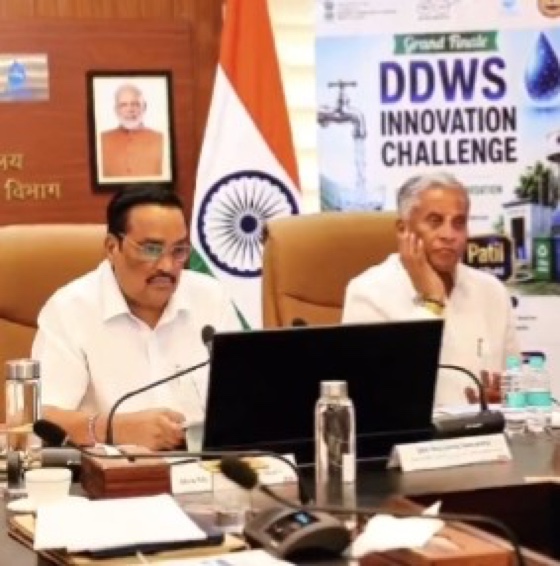
C. R. Patil launched Swachh Seva Aankalan at a virtual meeting with States and Union Territories, attended by Minister of State V. Somanna. It is an annual Gram Panchayat-level digital self-assessment framework under Swachh Bharat Mission (Grameen), involving Gram Panchayats, Gram Sabhas, Village Water and Sanitation Committees, and district and State officials.
31 Mar 2026
₹1,561.53 crore was released for 2025–26 to Uttar Pradesh, Chhattisgarh, Madhya Pradesh, Odisha and Maharashtra, following the fulfilment of compliance conditions — a signed reform-linked memorandum of understanding, scheme validation against the Sujalam Bharat asset registry, certified technical compliance and reconciled expenditure.
22 Mar 2026
The Union Minister e-released the operational guidelines for the restructured mission at the culmination of Jal Mahotsav 2026, twelve days after the Union Cabinet approved the restructuring.
28 Jan 2026
At an interaction with WaSH Warriors, community representatives and school students in New Delhi, the Minister inaugurated 25 JALAJ Livelihood Centres — a joint initiative of the Namami Gange Mission and the Wildlife Institute of India linking river conservation to livelihoods in the Ganga basin, with a stated focus on women's participation.